
Introduction
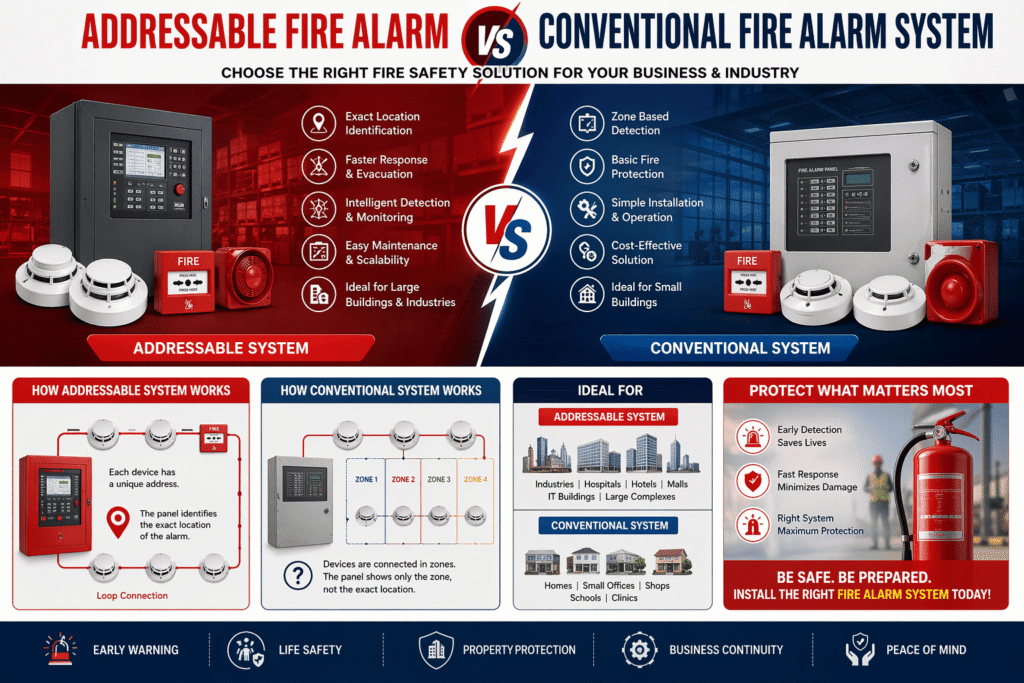
Fire safety is essential for homes, businesses, and industries. Choosing the right fire alarm system ensures faster response and prevents major loss and damage.Fire safety is not optional—it’s a critical requirement for homes, businesses, factories, and large-scale industrial facilities. Choosing the right fire alarm system can mean the difference between quick response and devastating loss.
Two of the most widely used fire detection systems are:
- Conventional Fire Alarm Systems
- Addressable Fire Alarm Systems
If you’re a homeowner, business owner, or industrial decision-maker, understanding the difference between these systems will help you make the right investment in safety, compliance, and efficiency.
What is a Fire Alarm System?
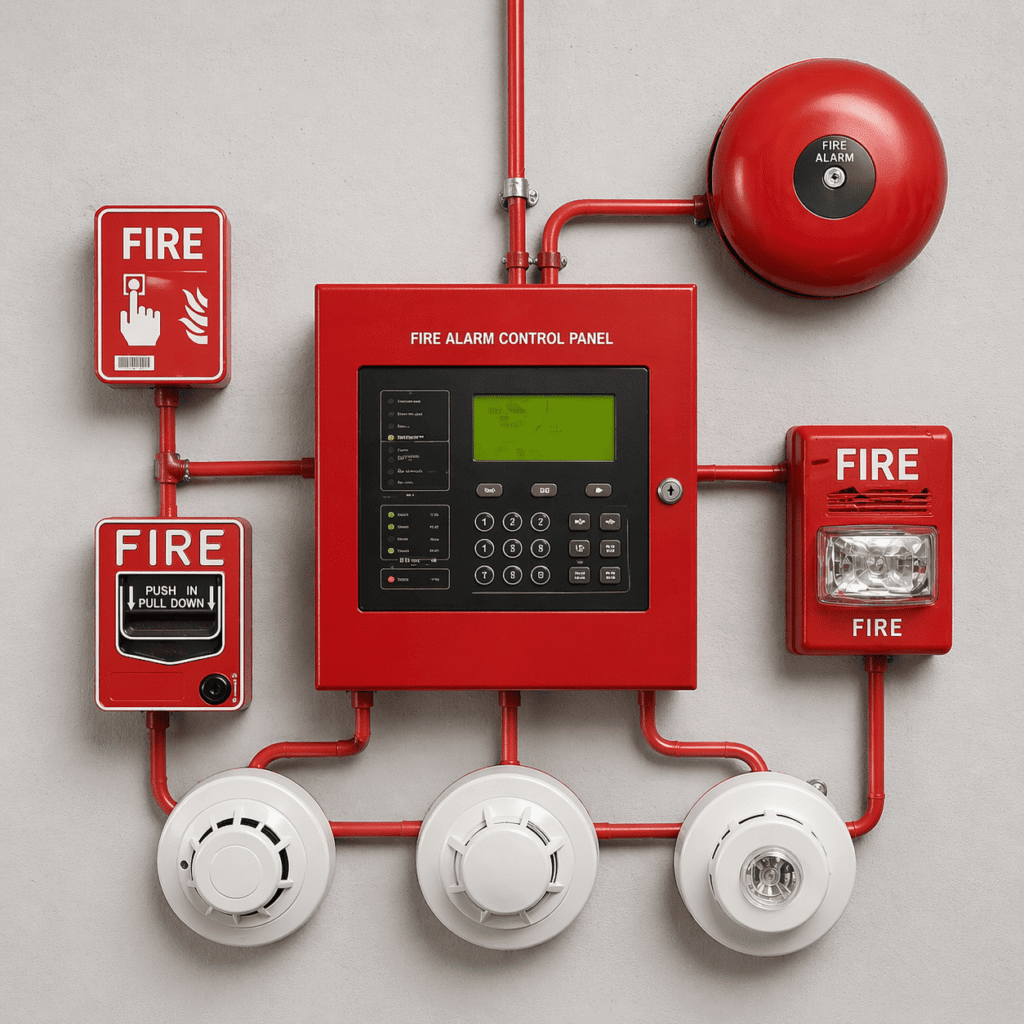
A fire alarm system is designed to detect fire in its early stages and alert occupants so they can evacuate safely. It typically includes:
- Smoke detectors
- Heat detectors
- Manual call points
- Alarm sounders
- Control panel
The key difference between systems lies in how they detect and communicate fire signals.
What is a Conventional Fire Alarm System?
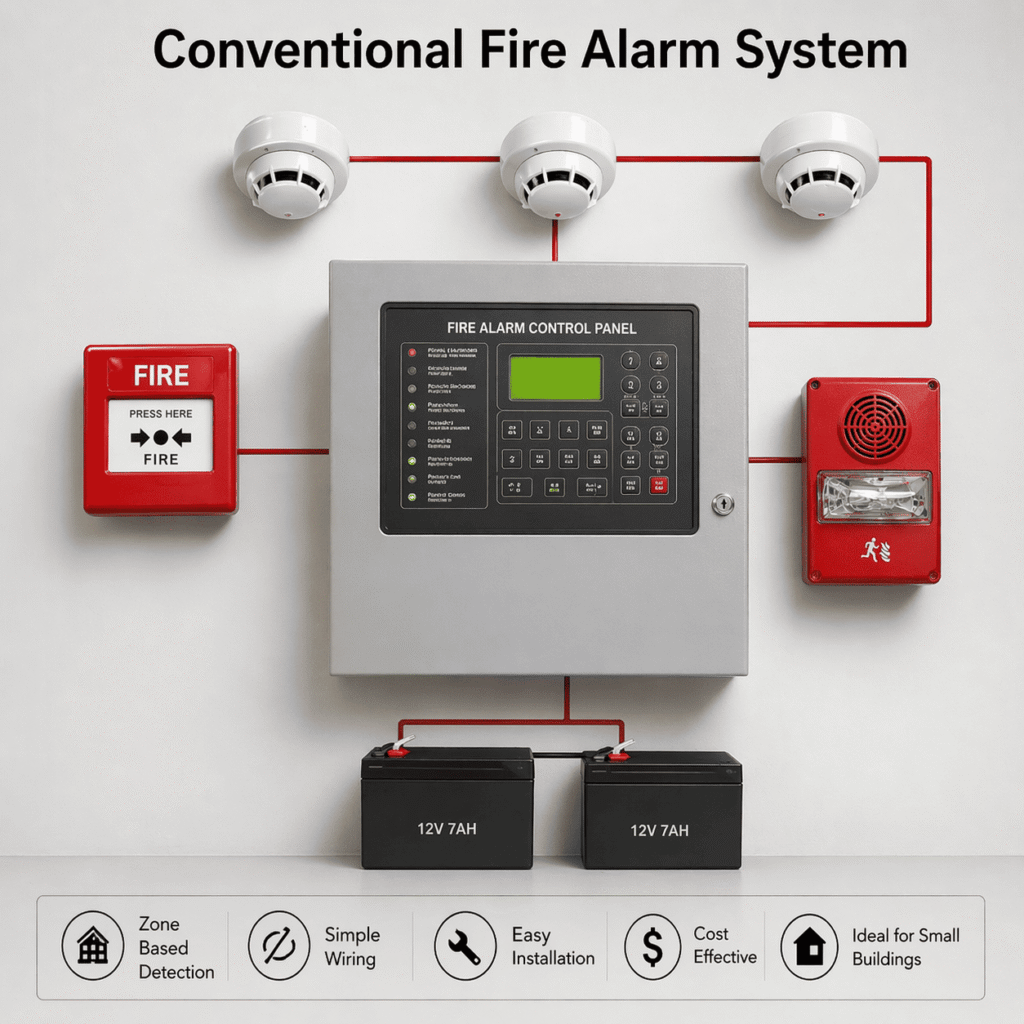
A conventional fire alarm system divides a building into multiple zones. Each zone contains several detectors connected by wiring to a central control panel.
How It Works
- Each zone represents a specific area (e.g., floor or room group)
- When a detector is triggered, the panel shows which zone has the issue
- It does not identify the exact device or location
Example
If Zone 3 (warehouse section) triggers an alarm, you know the fire is somewhere in that zone—but you must manually locate it.
Features of Conventional Fire Alarm Systems
- Zone-based detection
- Simple wiring system
- Lower initial cost
- Basic fire detection capability
- Limited information display
Advantages of Conventional Systems
1. Cost-Effective
Ideal for small buildings or budget-conscious projects.
2. Easy Installation
Simple wiring makes installation quicker.
3. Suitable for Small Areas
Best for:
- Small offices
- Shops
- Residential buildings
- Schools
Limitations of Conventional Systems
1. No Exact Location Detection
You only know the zone—not the exact device.
2. More Time to Respond
Fire location must be manually identified.
3. Higher Maintenance Effort
Fault finding can be time-consuming.
4. Not Ideal for Large Facilities
Difficult to manage in complex or multi-story buildings.
What is an Addressable Fire Alarm System?
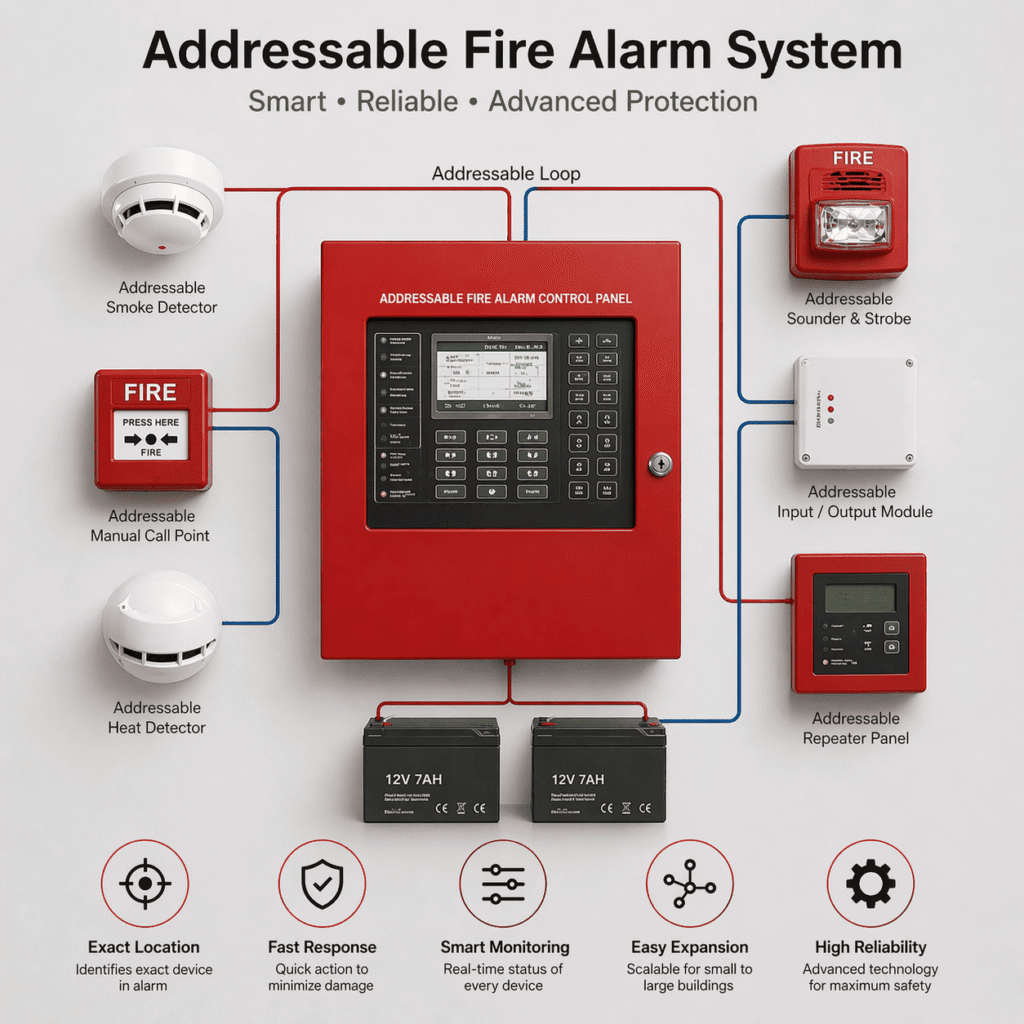
An addressable fire alarm system assigns a unique address to every device (detector, call point, etc.) connected to the system.
How It Works
- Each device has a unique ID
- The control panel identifies the exact location of the fire
- Communication is continuous between panel and devices
Example
Instead of “Zone 3 alarm,” the panel displays:
👉 “Smoke Detector 12 – Server Room – Floor 2”
Features of Addressable Systems
- Device-level identification
- Digital communication
- Loop wiring system
- Intelligent detection
- Real-time monitoring
Advantages of Addressable Systems
1. Precise Fire Location
Pinpoints the exact detector, saving critical response time.
2. Faster Emergency Response
Firefighters or staff can act immediately.
3. Advanced Monitoring
System continuously checks device health and status.
4. Reduced False Alarms
Smart sensors distinguish between smoke, dust, and heat.
5. Easier Maintenance
Faults are quickly identified and fixed.
6. Scalable System
Perfect for expanding buildings and industrial setups.
Limitations of Addressable Systems
1. Higher Initial Cost
More expensive than conventional systems.
2. Complex Installation
Requires skilled professionals.
3. Programming Required
Needs configuration and system setup.
Key Differences: Addressable vs Conventional
| Feature | Conventional System | Addressable System |
|---|---|---|
| Detection | Zone-based | Device-specific |
| Accuracy | Low | High |
| Response Time | Slower | Faster |
| Installation Cost | Low | Higher |
| Maintenance | Difficult | Easy |
| Scalability | Limited | High |
| Best Use | Small buildings | Large & industrial facilities |
Which System is Best for Customers?
Choose Conventional System if:
- You have a small property
- Budget is limited
- Building layout is simple
- Basic fire protection is sufficient
Examples:
- Small shops
- Homes
- Clinics
- Small offices
Choose Addressable System if:
- You manage a large or complex building
- Safety and quick response are critical
- You need real-time monitoring
- You want future scalability
Examples:
- Hotels
- Hospitals
- Shopping malls
- IT offices
- Warehouses
Why Addressable Systems Are Better for Industrial Use
For industrial environments, fire risks are much higher due to:
- Machinery
- Electrical systems
- Flammable materials
- High operational load
Key Benefits in Industry
1. Instant Fire Detection
Exact location reduces downtime and damage.
2. Integration with Safety Systems
Can connect with:
- Fire suppression systems
- Emergency shutdown systems
- HVAC controls
3. Reduced Production Loss
Faster response prevents large-scale damage.
4. Compliance with Safety Standards
Many industries require advanced fire systems for legal compliance.
Real-Life Scenario Comparison
Conventional System
A fire starts in a factory section.
- Alarm shows: “Zone 5”
- Staff must search the area
- Fire spreads during delay
Addressable System
Same situation:
- Alarm shows: “Heat Detector 27 – Machine Room”
- Immediate action taken
- Fire controlled quickly
Installation Considerations
For Conventional Systems
- Requires more wiring per zone
- Simpler panel setup
- Lower technical skill needed
For Addressable Systems
- Loop wiring reduces cable usage
- Requires system programming
- Needs expert installation
Maintenance and Service
Conventional
- Manual inspection required
- Fault detection takes time
- More downtime
Addressable
- Self-diagnostics
- Fault location displayed instantly
- Preventive maintenance possible
Cost Comparison
| Factor | Conventional | Addressable |
|---|---|---|
| Initial Cost | Low | High |
| Maintenance Cost | Medium-High | Low |
| Long-Term Value | Moderate | High |
👉 Conclusion: Addressable systems may cost more initially but save money over time.
Future of Fire Alarm Systems
Modern fire safety is moving toward:
- Smart detection systems
- IoT-enabled monitoring
- Remote access via mobile apps
- Integration with building management systems
Addressable systems are leading this transformation.
Final Conclusion
Choosing between a conventional and addressable fire alarm system depends on your needs, budget, and building size.
Summary
- Conventional System:
Best for small, simple, low-budget setups - Addressable System:
Best for large, complex, high-risk environments
Expert Recommendation
For industrialists and growing businesses, an addressable fire alarm system is the smarter and safer investment. It provides:
- Faster detection
- Accurate location tracking
- Better safety compliance
- Long-term cost efficiency