
Home Fire Safety
Home is the place where we feel safest. It is where families live, children grow, and memories are created. However, many people overlook one critical aspect of safety — fire protection. A small spark can quickly turn into a devastating disaster if proper precautions are not taken. Home fire safety is not just about installing equipment; it is about awareness, preparation, and responsible habits.
In this blog, we will discuss the importance of home fire safety, common causes of house fires, preventive measures, and essential equipment every home should have.
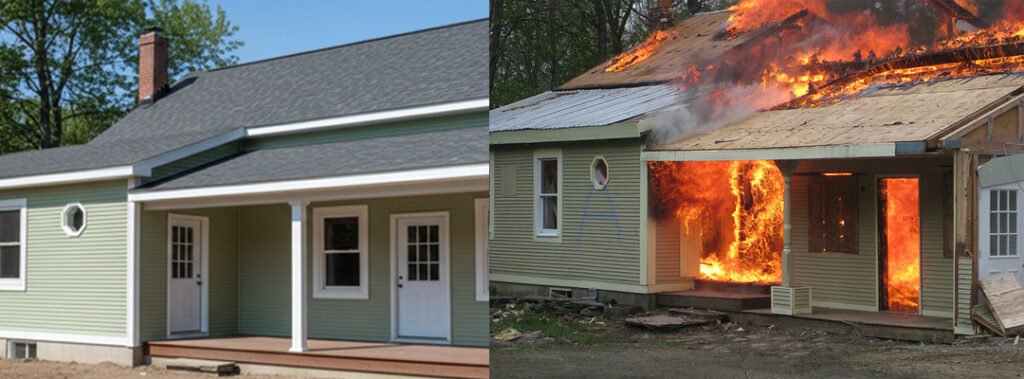
Why Home Fire Safety is Important?
Fire accidents in residential buildings are more common than many people think. Electrical faults, gas leaks, kitchen accidents, and unattended candles are just a few examples of how fires can start. Within minutes, a small flame can spread rapidly, causing serious injury, loss of life, and property damage.
Proper fire safety measures can:
- Protect your family members
- Minimize property damage
- Prevent injuries and fatalities
- Reduce financial loss
- Provide peace of mind
Preparedness can make the difference between a minor incident and a major tragedy.
6 Numbers of Common Causes of Home Fire Safety

Understanding the causes of home fires is the first step toward prevention.
1. Electrical Faults
Overloaded circuits, damaged wiring, loose connections, and faulty appliances are major fire hazards. Old electrical systems are particularly risky if not maintained properly.
2. Kitchen Accidents
Cooking is one of the leading causes of house fires. Leaving food unattended on the stove or overheating oil can quickly cause flames.
3. Gas Leaks
Improper LPG connections, damaged hoses, or failure to turn off gas regulators can result in dangerous leaks and explosions.
4. Smoking Materials
Carelessly discarded cigarettes can ignite furniture, curtains, or bedding.
5. Candles and Diyas
During festivals or power cuts, open flames like candles or diyas can easily cause accidental fires.
6. Heating Equipment
Heaters placed near curtains, furniture, or bedding can start a fire if not used carefully.
7 Best Essential Home Fire Safety Tips
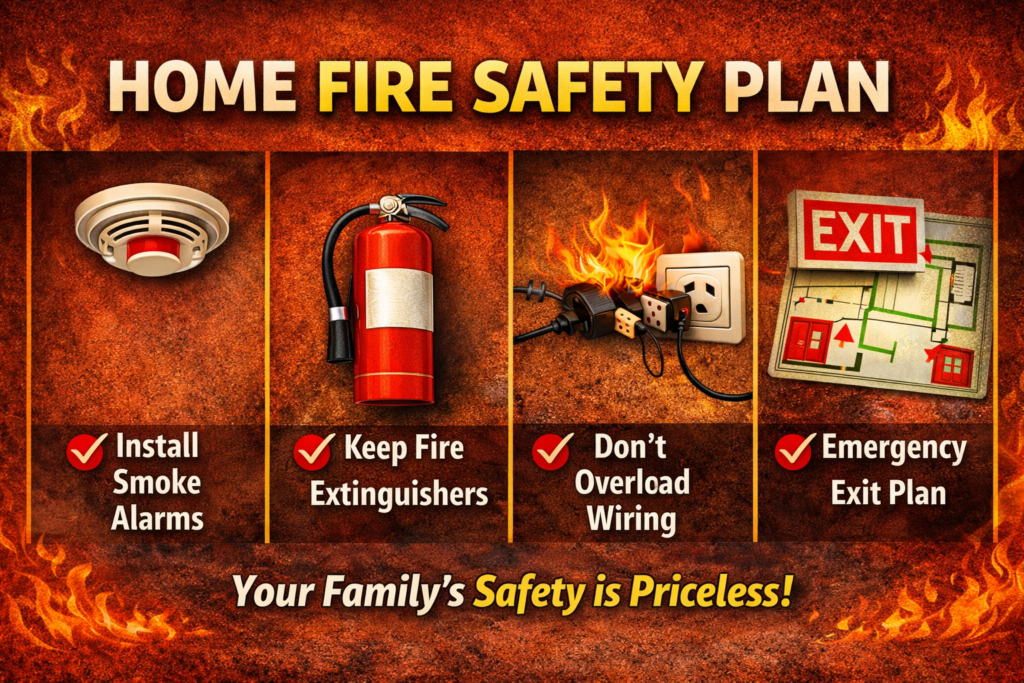
Taking simple precautions can significantly reduce fire risks in your home.
1. Install Smoke Detectors
Smoke detectors are the first line of defense. Install them in bedrooms, hallways, and living areas. Test them monthly and replace batteries regularly.
2. Keep Fire Extinguishers at Home
Every home should have at least one multi-purpose fire extinguisher. Keep it in the kitchen or near high-risk areas. Ensure family members know how to use it.
3. Avoid Overloading Electrical Outlets
Do not plug too many appliances into a single socket. Use high-quality extension boards and avoid damaged wires.
4. Practice Safe Cooking Habits
- Never leave cooking unattended.
- Keep flammable items away from the stove.
- Turn off the gas regulator after cooking.
- Keep a lid nearby to smother small oil fires.
5. Store Flammable Materials Safely
Keep items like petrol, kerosene, cleaning chemicals, and aerosols away from heat sources.
6. Create an Emergency Escape Plan
Every family should have a fire escape plan. Identify two exits from each room if possible. Practice evacuation drills, especially if you have children or elderly family members.
7. Keep Emergency Numbers Handy
Keep local fire department numbers easily accessible and saved in mobile phones.
Fire Safety for Children and Elderly Family Members
Children and elderly individuals are more vulnerable during fire emergencies. Teach children:
- Not to play with matches or lighters
- To inform adults if they smell gas or see sparks
- Basic evacuation steps
For elderly family members:
- Ensure easy access to exits
- Avoid placing obstacles in pathways
- Keep emergency lighting available
Importance of Regular Fire Safety Checks
Routine inspections can prevent major problems. Conduct the following checks:
- Inspect LPG hoses and regulators every few months
- Check electrical wiring annually
- Test smoke alarms monthly
- Service fire extinguishers as per manufacturer guidelines
Prevention is always cheaper and safer than dealing with a fire accident.
What to Do During a Fire Emergency
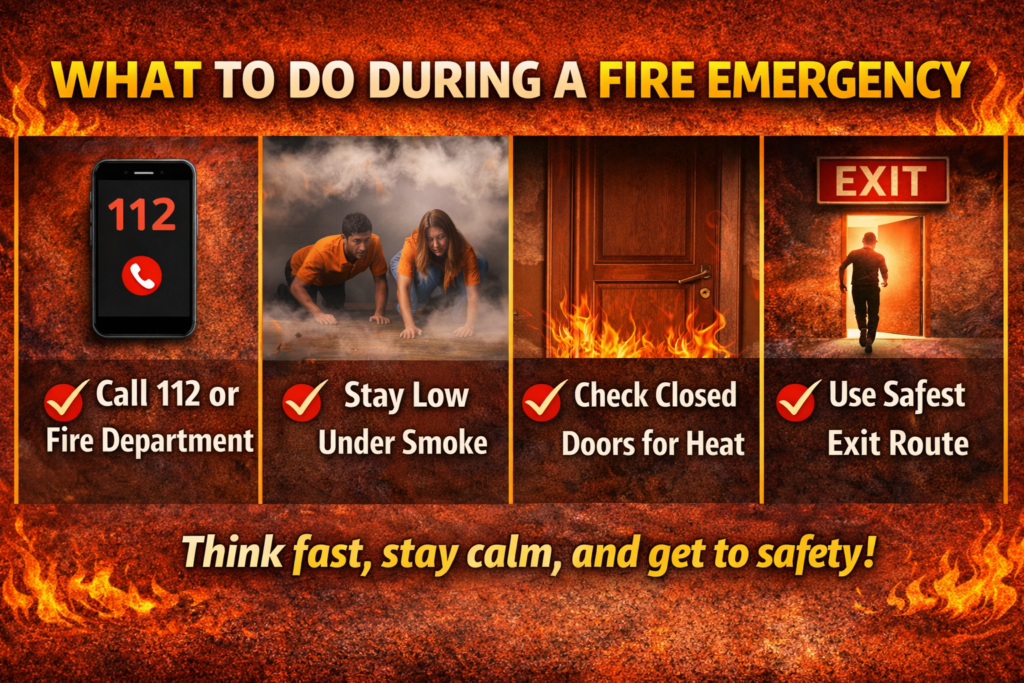
Even with precautions, emergencies can happen. Knowing what to do can save lives.
- Stay calm and avoid panic.
- Alert all family members immediately.
- Use a fire extinguisher only if the fire is small and manageable.
- Do not use water on electrical or oil fires.
- If there is heavy smoke, stay low to the ground while exiting.
- Do not use elevators in apartments.
- Call the fire department immediately after reaching a safe place.
Remember, life is more important than property. Never risk your life trying to save belongings.
Modern Fire Safety Equipment for Homes
Technology has improved home fire safety significantly. Consider installing:
- Smoke and heat detectors
- Fire alarm systems
- Automatic sprinkler systems (for large homes)
- Gas leak detectors
- Emergency lighting systems
These systems provide early warnings and help control fire before it spreads.
Building a Fire-Safe Culture at Home
Fire safety is not a one-time activity. It should become a daily habit. Encourage responsible behavior among family members. Conduct regular discussions about safety. During festivals involving fireworks or diyas, take extra precautions.
Awareness and preparedness are the strongest defenses against fire hazards.
Conclusion
Home fire safety is not optional — it is essential. A few preventive measures, proper equipment, and basic awareness can save lives and property. Fire accidents often occur unexpectedly, but their impact can be reduced significantly with preparation.
Protecting your home means protecting your loved ones. Make fire safety a priority today, and ensure that your home remains a safe and secure place for everyone.