Ensure the safety of your property, employees, and assets with our expert Fire Safety Design & Installation services. We provide end-to-end fire protection solutions tailored to residential, commercial, and industrial spaces, ensuring compliance with national safety standards and regulations.
Our team of certified professionals specializes in designing and installing advanced fire protection systems that detect, control, and suppress fire hazards at the earliest stage. From initial risk assessment to final system commissioning, we deliver reliable and efficient fire safety solutions that you can trust.
Importance of Fire Safety Design
Fire safety design focuses on identifying potential fire risks in a building and implementing appropriate preventive and protective systems. Proper planning ensures that fire detection, alarm, and suppression systems work efficiently during emergencies. It also helps organizations comply with fire safety regulations and building codes.
A well-planned fire safety system minimizes damage, prevents loss of life, and ensures safe evacuation during fire incidents. It also increases the reliability of the infrastructure and enhances workplace safety.
Fire Safety System Design and Installation Process
Step-by-Step Approach for Maximum Protection
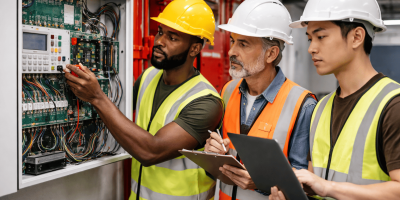
Site Inspection & Risk Assessment
The first step is to thoroughly inspect the site and identify potential fire hazards.
What we do:
Analyze building layout and occupancy type
Identify fire risk areas (electrical panels, storage zones, etc.)
Evaluate existing safety measures
Assess compliance requirements
This step helps in understanding the level of protection needed.
System Design & Planning
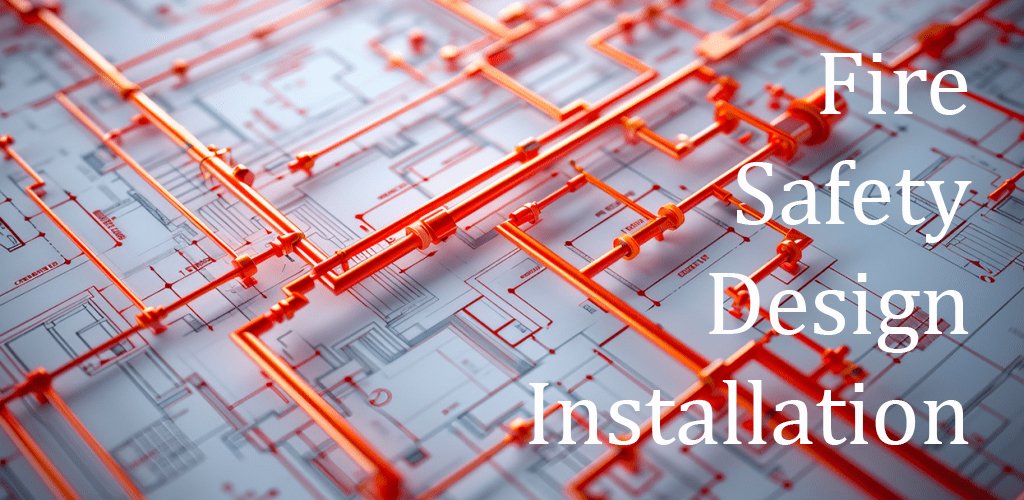
Based on the assessment, a customized fire safety system is designed.
Includes:
Fire alarm system layout
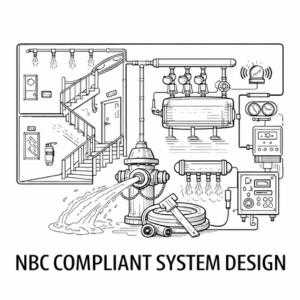
Sprinkler and hydrant system design
Detector placement planning
Emergency exit and evacuation routes
Designs are created as per NBC and fire safety standards.
Equipment Selection
Choosing the right equipment is crucial for system performance.
We select:
Certified fire alarms and detectors
High-quality sprinkler systems
Fire extinguishers for different fire classes
Pumps, hydrants, and control panels
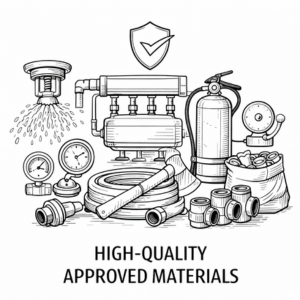
Only approved and reliable equipment is used.
Installation & Execution
Professional installation ensures system effectiveness.
Key activities:
Installing fire alarm panels and detectors
Setting up sprinkler pipelines
Mounting hydrants and extinguishers
Electrical and control system integration
Done by trained technicians with precision.
Testing & Commissioning
Before handover, the entire system is tested.
Testing includes:
Alarm functionality check
Sprinkler activation test
Hydrant pressure testing
Emergency evacuation drills
Ensures the system is fully operational and reliable.
Maintenance & AMC Support
Regular maintenance is essential to keep systems working.
Services include:
Routine inspections
Equipment servicing
Fault detection and repair
Annual Maintenance Contracts (AMC)
Keeps your system ready at all times.
Designing an effective fire safety system is not just about installing equipment—it’s about creating a strategic, well-planned safety network that protects lives, property, and operations. A professional fire safety design process ensures compliance, reliability, and quick response during emergencies.
Fire alarm systems
Fire detection systems
Fire sprinkler systems
Fire Hydrant & Sprinkler Systems
Fire Suppression Systems
Emergency evacuation planning
Each component is integrated into a comprehensive fire protection plan that ensures rapid detection and response in case of fire.
Fire Safety Installation Services
After the design phase, professional technicians carry out the installation of fire safety equipment and systems. Proper installation is essential to ensure that all components function correctly during emergencies.
Common fire safety installations include:
Fire Alarm Systems – Detect smoke or heat and alert occupants immediately.
Fire Sprinkler Systems – Automatically release water to control fire.
Fire Hydrant Systems – Provide a high-pressure water supply for firefighting.
Fire Extinguishers – Portable devices used for initial fire control.
Fire Suppression Systems – Special systems used in data centers, kitchens, and industrial areas.
Emergency Lighting & Exit Signs – Help people evacuate safely during fire incidents.
All installations must be performed according to fire safety standards and tested to ensure proper functionality.
Maintenance and Testing
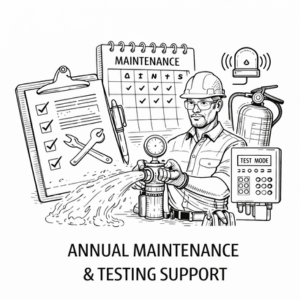
Regular inspection, testing, and maintenance are essential to keep fire safety systems operational. Periodic servicing ensures that alarms, sprinklers, extinguishers, and hydrant systems are ready to perform during emergencies. Routine maintenance also helps detect faults early and ensures compliance with safety regulations.
Benefits of Professional Fire Safety Systems
Early fire detection and warning
Protection of lives and property
Compliance with fire safety regulations
Reduced fire damage and business interruption
Increased safety in residential, commercial, and industrial buildings