
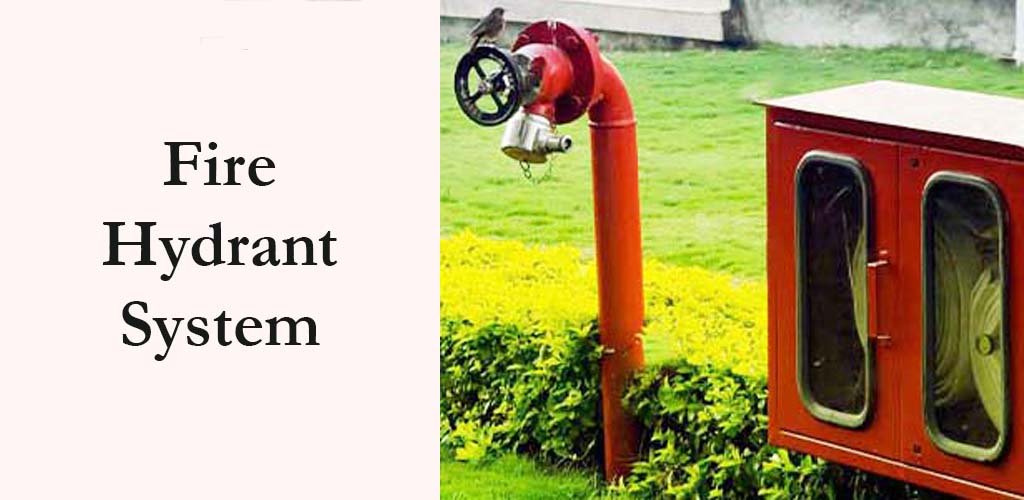
Basics of Fire Hydrant System
A fire hydrant is a vital fire protection system that supplies water for firefighting operations. Connected to underground water mains, fire hydrants are strategically installed across cities and communities to ensure quick and reliable access to water during fire emergencies.
1. Wet Barrel Fire Hydrant System
A Wet Barrel Fire Hydrant System is a type of fire hydrant system in which the hydrant barrel is always filled with water under pressure. Each outlet of the hydrant has its own individual control valve, allowing water to be discharged immediately when the valve is opened. This system is mainly used in areas where freezing temperatures do not occur, as the presence of water in the barrel can cause damage in cold climates.
Water remains constantly present inside the hydrant barrel
Independent valves are provided for each outlet
Provides instant water supply during fire emergencies
Connected directly to a pressurized water supply network
Suitable for warm or tropical regions
Commonly used in industrial plants, factories, refineries, ports, and urban areas
Allows quick connection of fire hoses by firefighters
Requires regular maintenance to avoid leakage and corrosion
Not recommended for cold climates due to freezing risk
Application
Cities and towns in warm climates
Industrial areas with reliable water supply
Residential and commercial zones in non-freezing regions
2. Dry Barrel Fire Hydrant System
A Dry Barrel Fire Hydrant System is a type of fire hydrant system in which water does not remain inside the hydrant barrel under normal conditions. The main control valve is installed below ground level, and water flows into the hydrant only when the hydrant is opened during a fire emergency. This system is mainly used in cold regions where temperatures fall below freezing, to prevent water inside the hydrant from freezing and damaging the system.
The hydrant barrel remains dry when not in use
Water supply valve is located below frost line (underground)
Water flows into the hydrant only when the top valve is opened
After use, remaining water automatically drains out
Designed especially for cold or freezing climates
Prevents pipe bursting due to frozen water
Requires proper drainage system below the hydrant
Application
- Cold regions and hilly areas
- Cities with winter temperatures below freezing
- Industrial zones in cold climates
- Municipal fire protection systems
3. Standpipe Fire Hydrant System
A Standpipe Fire Hydrant System is a fixed fire-fighting water supply system installed in buildings to provide ready access to water for fire-fighting through vertical pipes (standpipes) with hose connections at each floor.
It is mainly used by firefighters and trained personnel to control or extinguish fire, especially in multi-storey and high-rise buildings.
The system ensures that water is immediately available at upper floors, eliminating the need to carry long hoses from ground level during an emergency.
Vertical pipes (standpipes) running through the building
Fire hose connections (landing valves) on each floor
Water source (overhead tank / underground tank / fire pump)
Fire pumps (main pump, jockey pump, standby pump)
Fire brigade inlet connection at ground level
Application
High-rise residential buildings
Commercial complexes
Hospitals
Hotels
Malls
Industrial buildings
Office towers
4. Underground Fire Hydrant System
An Underground Fire Hydrant System is a fixed fire-fighting water supply system installed below ground level, designed to provide a high-pressure and high-volume water source for extinguishing large fires.
It is mainly used in industrial areas, factories, warehouses, commercial buildings, refineries, power plants, and large campuses, where a continuous and reliable water supply is required during fire emergencies.
In this system, hydrant valves are installed inside underground chambers, and during a fire, fire hoses are connected to these valves to deliver water directly to the fire location with the help of pumps.
Underground hydrant valve (in masonry chamber)
Fire water storage tank (UG tank / reservoir)
Fire pumps:
Main fire pump
Standby pump
Jockey pump
Underground ring main pipeline (MS / DI pipes)
Isolation valves & sluice valves
Hose boxes with hoses, nozzles & branch pipes
Pressure gauges & flow indicators
Power supply & pump control panel
Application
Factories & manufacturing units
Warehouses & logistics hubs
Oil & gas plants
Chemical industries
Power plants
Airports & railway yards
Large commercial & industrial campuses
5. Wall-Mounted Fire Hydrant System
A Wall-Mounted Fire Hydrant System is a fixed fire-fighting system in which hydrant outlets, hoses, landing valves, and related accessories are installed on or inside the walls of a building. The system is connected to a dedicated water supply network and is designed to provide immediate water access for fire-fighting during emergencies, especially inside buildings.
Installed on building walls or inside fire hose cabinets
Provides pressurized water for fire-fighting
Used mainly in indoor fire protection
Connected to a fire pump system and water storage tank
Allows firefighters or trained occupants to fight fire at an early stage
Commonly includes landing valves, hoses, branch pipes, and hose reels
Designed according to fire safety codes and standards
Application
Commercial buildings
Factories and industrial units
Hospitals
Shopping malls
Hotels
High-rise residential buildings
Educational institutions
Choose Right Fire Hydrant System
Climate Conditions
Wet Barrel Hydrant
Best for warm or tropical regions
No risk of freezing
Dry Barrel Hydrant
Ideal for cold regions
Prevents water freezing inside the hydrant
Type of Property
Residential Areas – Wet barrel (where climate allows)
Industrial & Factories – Underground or yard hydrant systems
High-Rise Buildings – Standpipe and hydrant system combination
Commercial Buildings – External hydrants with internal standpipes
Water Supply Availability
Continuous pressurized municipal water → Wet Barrel Hydrant
Non-pressurized or tank-based system → Dry Barrel / Underground Hydrant
Low pressure → Requires fire pump and storage tank
Area Coverage & Spacing
Large campuses or factories need:
Multiple hydrants
Proper spacing for full coverage
Ensure fire hose can reach every critical zone
Maintenance & Reliability
Wet barrel hydrants need regular valve checks
Underground hydrants require clear access and marking
Choose systems with easy inspection and servicing
Safety Codes & Compliance
Follow applicable standards:
NBC (India)
IS 3844
IS 13039
Local fire authority norms
Approval from Fire Department is mandatory